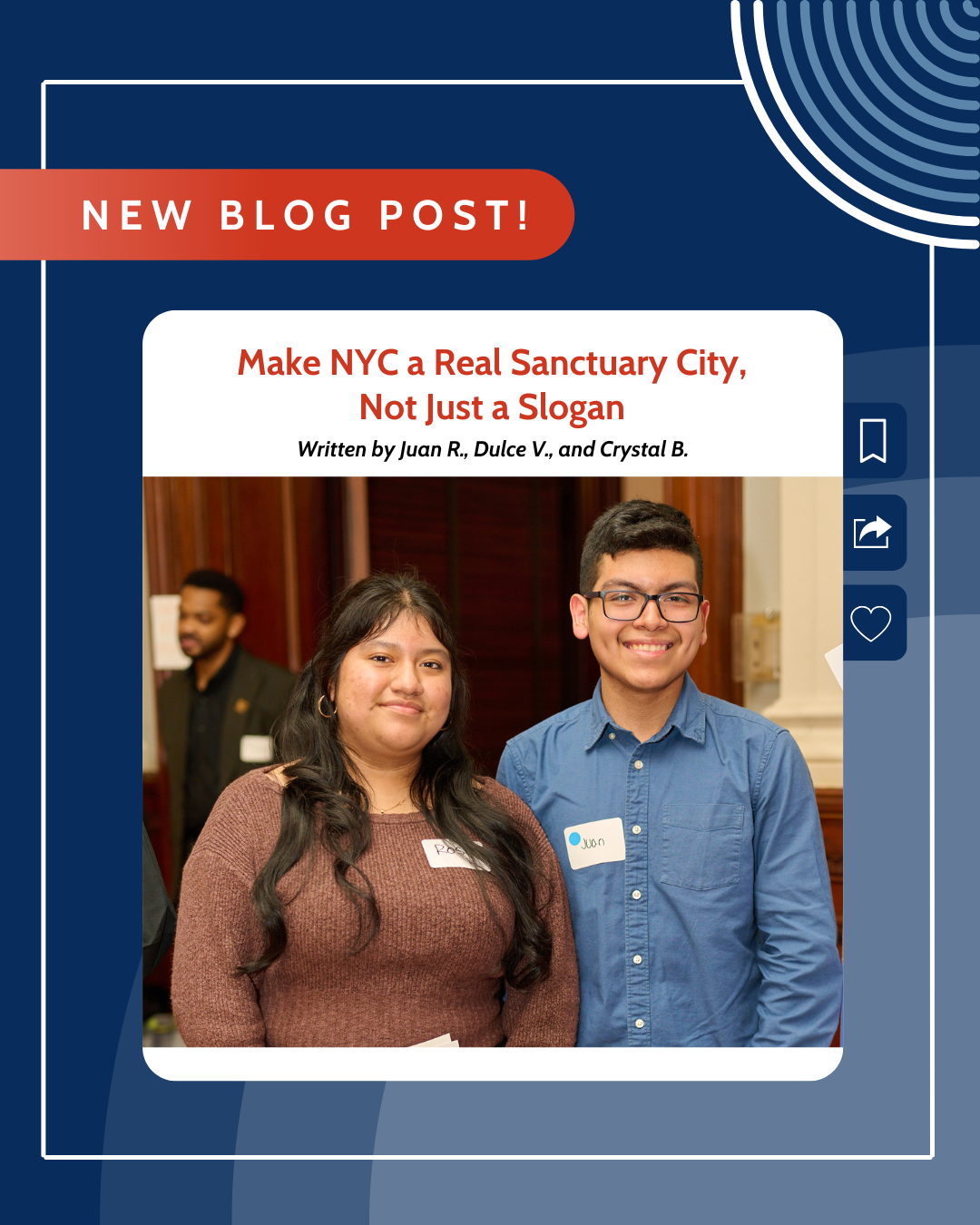
By Juan R., Dulce V., and Crystal B.
New York City says it is a “sanctuary city,” but that promise does not mean much if federal immigration agents can still act in secret and local officials do not enforce the rules. For a lot of immigrant families, the fear is simple: a regular day—going to school, the hospital, or work—could turn into an ICE arrest. City leaders need to do more than say the word “sanctuary.” They have to make sure NYPD and city agencies follow sanctuary policies and that immigrants actually feel safe in every borough.
Students at East Bronx Academy wrote to Council Members and explained how this feels on the ground. Shelters and basic services are already limited, and when people believe ICE might show up, they are scared to use the help that does exist. A parent might skip a doctor’s appointment, keep a child home from school, or stay quiet about a crime because they worry immigration agents will be involved. That is not just harmful to immigrants. It also makes the whole city less safe, because people are less likely to report violence or work with police when something goes wrong.
To make sanctuary status real, NYC officials should start with four basic steps. First, NYPD should not help ICE with civil immigration enforcement or share sensitive information like addresses or court dates, except when the law absolutely requires it. Some rules already say this, but they are not always followed. The City Council’s Oversight and Investigations Committee, led by Council Member Gale Brewer, should regularly check NYPD–ICE contacts and release the results.
Second, federal agents working in NYC should have to show clear badges, ID, and names or numbers, and should not hide their faces unless there is a specific, documented safety reason.
Third, the city must treat schools, hospitals, shelters, workplaces, and places of worship as truly safe spaces. Policies should say that immigration enforcement cannot happen in these places without a real judicial warrant, not just a paper from ICE. Principals, hospital leaders, and shelter staff need training so they know when they can say, “No, you can’t come in,” and how to ask for a warrant and report abuse. When families know they can go to school or get medical care without being targeted, they are more involved in city life and more likely to seek help when they need it.
Fourth, there have to be real consequences when sanctuary rules are broken. If NYPD or a city agency illegally cooperates with ICE, or if federal agents break city policies in a school, hospital, or shelter, that should trigger an investigation. The City Council and Public Advocate should demand documents, hold hearings, and push for discipline if necessary. Community members, including students, need simple ways to report what they see: hotlines, online forms, or trusted organizations that will take complaints seriously. Sanctuary cannot be just a press conference. It has to show up in budgets, training, and actual enforcement.
New York became a sanctuary city because people organized and demanded it, not because leaders woke up one day and decided to be kind. That same pressure is needed now. If local officials do not act, “sanctuary” becomes just a sticker on a website. Council Members Alexa Avilés, Shahana Hanif, Gale Brewer, Speaker Adrienne Adams, and Public Advocate Jumaane Williams have the power to make a difference. They should strengthen oversight of NYPD–ICE cooperation, require transparency from federal agents, and defend sensitive locations so immigrants can live, learn, work, and worship without constant fear. Students are already writing letters and postcards asking for this. The next move belongs to City Hall.