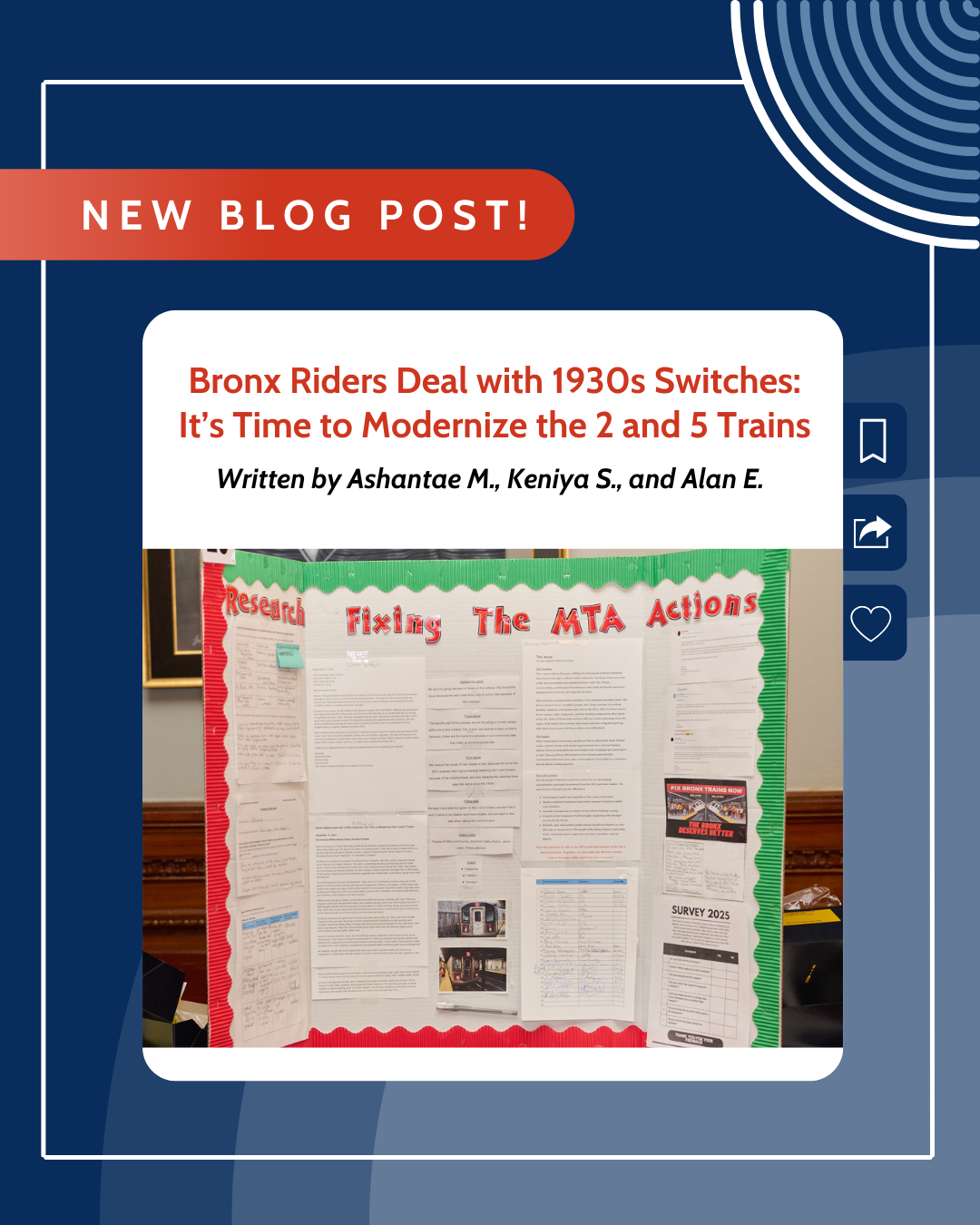
By Ashantae M., Keniya S., and Alan E.
Every morning, the 2 and 5 trains fill up with Bronx students, workers, and elders just trying to get where they need to go. For a lot of us, there is no backup plan. If the train is late or breaks down, we are the ones who are late to school, to work, to doctor’s appointments. What makes it worse is knowing this is not just “bad luck.” It is decades of neglect.
During a civic project we, students from East Bronx Academy, met with a senior organizer named Danna Dennis from Riders Alliance. She told us something shocking but that also kind of made sense: some of the switches that control the 2 and 5 lines are from around the 1930s. That means the technology that decides whether our train moves or stops is almost 100 years old. In other parts of the system, signals and trains have been upgraded and modernized. In the Bronx, we get stuck with the leftovers.
This old equipment has real consequences. When the 2 or 5 is delayed, students miss part of first period or whole classes and then get blamed for being late. Workers lose wages, or their bosses get mad at them again and again. Overcrowded platforms and packed trains feel unsafe, especially when people push to get on or off. If you are an elder, a person with a disability, or someone with little kids, just standing on the platform can feel stressful.
Officials talk a lot about “safety” on the trains and add more police, cameras, and rules. There are long-term plans and mental health teams, and outreach groups, which can all be helpful. But none of that changes the fact that if you are still running trains on 1930s switches, things are going to break. The 2 and 5 do not just need more enforcement; they need serious investment in basic infrastructure so the trains actually run on time and do not constantly get stuck.
The Bronx deserves the same level of service as richer parts of the city. The 2 and 5 are not side characters; they are main lines that connect neighborhoods in the Bronx to jobs, schools, and hospitals downtown. Many riders on these lines are low-income and people of color, with fewer other ways to get around. When the city and state ignore these lines, they are basically saying some communities’ time and safety matter less.
Governor Hochul, the MTA board, and city officials need to make the 2 and 5 a top priority, not an afterthought. That means funding the replacement of 1930s-era switches and signals, setting clear deadlines for upgrades, and sharing that timeline with the public. It also means improving bus routes that feed into 2 and 5 stations, so people are not stranded when something goes wrong underground.
As students, we get told to be responsible, show up on time, and plan ahead. But how are we supposed to do that when the train system is stuck in the last century? We met with organizers, read about current safety programs, and tried to understand how decisions get made. Now we are asking for action. Bronx riders are not asking for luxury; we are asking for basic, safe, modern public transit.
So here is the demand: fix the 2 and 5. Replace the ancient switches. Invest real money in Bronx transit. Include riders, students, and groups like Riders Alliance in the planning, and give us yearly updates on what is getting done. Until that happens, we will keep speaking up, because everyone deserves a train system that actually works no matter what borough they live in.